Linn — The LP12 and the Politics of the Groove
By Rafi Mercer
There are machines that reproduce sound, and there are machines that shape belief. The Linn Sondek LP12 belongs firmly in the second camp. To own one is not merely to play records; it is to take a position, to subscribe to a philosophy that redefined how the hi-fi world thought about music. And in listening bars, where philosophies of sound quietly define the mood of a night, the LP12 has found its place as both tool and statement.
When Ivor Tiefenbrun founded Linn in Glasgow in 1973, he did so with a conviction that bordered on provocation: the turntable mattered more than any other part of the system. In an era when amplifiers and loudspeakers were treated as the glamour components, Tiefenbrun argued that everything began in the groove. If the turntable failed to extract the music with precision, no downstream component could restore it. The Sondek LP12 was the physical embodiment of that manifesto.
The design was a suspended sub-chassis belt-drive, not unlike Thorens, but refined with almost obsessive attention to bearing tolerances and platter stability. What set it apart was not the architecture alone but the fervour with which Linn promoted it. Demonstrations across the UK and Europe turned the listening order upside down: the same amplifier and speakers would sound transformed when the front-end was switched from a rival deck to the LP12. People left those rooms convinced. Dealers built empires on it. A movement was born.
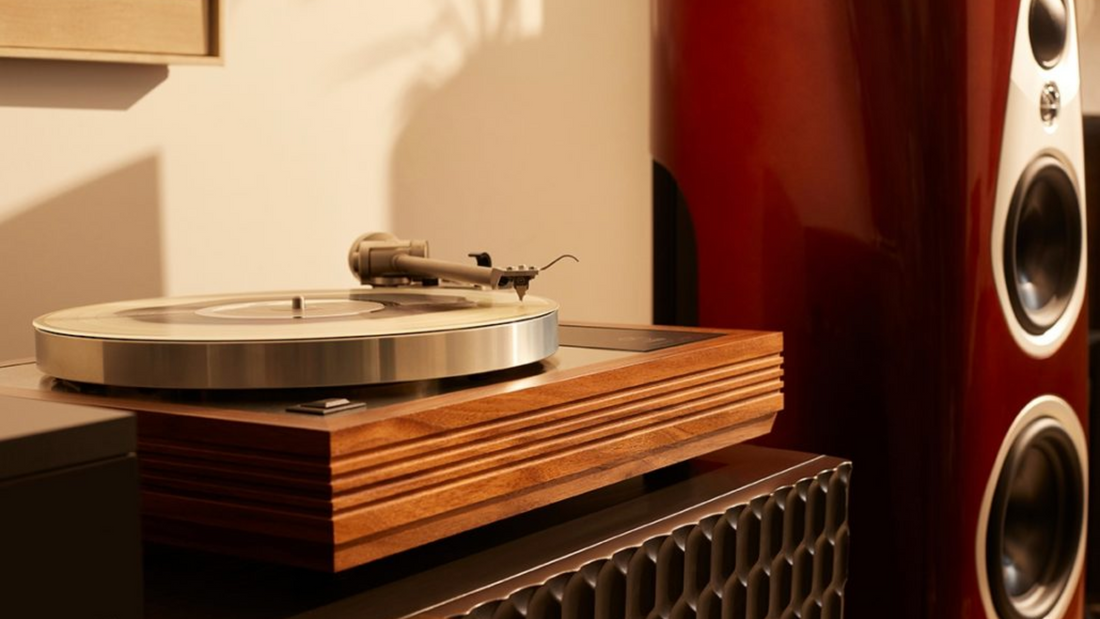
For listening bars, the LP12 carries that heritage of front-end purity. I have seen one in a Stockholm bar, its fluted plinth glowing under a low lamp, driving a pair of Tannoys with a poise that made even a noisy crowd fall silent when the needle touched a pressing of Keith Jarrett’s The Köln Concert. The room seemed to breathe differently; the piano not amplified but revealed. That is the Linn gift — it doesn’t dramatise the music, it insists you hear its intent.
Unlike the rugged universality of a Technics, the LP12 is not a deck for all occasions. It demands careful setup, sympathetic partners, and respect for its delicacy. In a kissa, that fragility can feel almost ceremonial: the act of lowering the stylus becomes ritual, the suspended platter floating like a dancer about to step onto stage. Yet the reward is a kind of flow, a rhythm in the groove that feels less mechanical than organic.
Of course, the LP12 has also been divisive. For decades it was criticised as dogma, its cult-like following treated with suspicion. Rival camps emerged — belt-drive versus direct-drive, objectivist measurement against subjectivist listening. But in hindsight, what Linn did was spark an argument that sharpened everyone’s understanding of the value of source. That argument still hangs in the air in many listening bars, where the choice of turntable is as much a declaration as the whisky selection.
Part of the LP12’s magic lies in its continuity. Unlike most decks, it has never really gone out of production. It has evolved through upgrades, each new bearing, armboard, or power supply adding to its myth. Some bars run vintage models in original form, their dustcovers long discarded, their plinths worn smooth by decades of touch. Others keep them tuned to the latest spec, a hybrid of heritage and modernity. Both approaches share the same heart: a belief that the groove contains everything.
To encounter an LP12 in a listening bar is to encounter not just a turntable but an idea. It reminds us that fidelity is not simply a matter of watts or decibels, but of what is rescued from the record itself. In a world where music can feel weightless, streaming from servers into earbuds, the LP12 still asserts that meaning begins at the point of contact, where stylus meets groove.
In that sense, it is political. It argues for care, for craft, for listening as an act of attention rather than consumption. And in bars shaped for detail and depth, that argument still resonates. The LP12 doesn’t just play music. It asks you to decide how you want to hear.
Rafi Mercer writes about the spaces where music matters. For more stories from Tracks & Tales, subscribe, or click here to read more.