
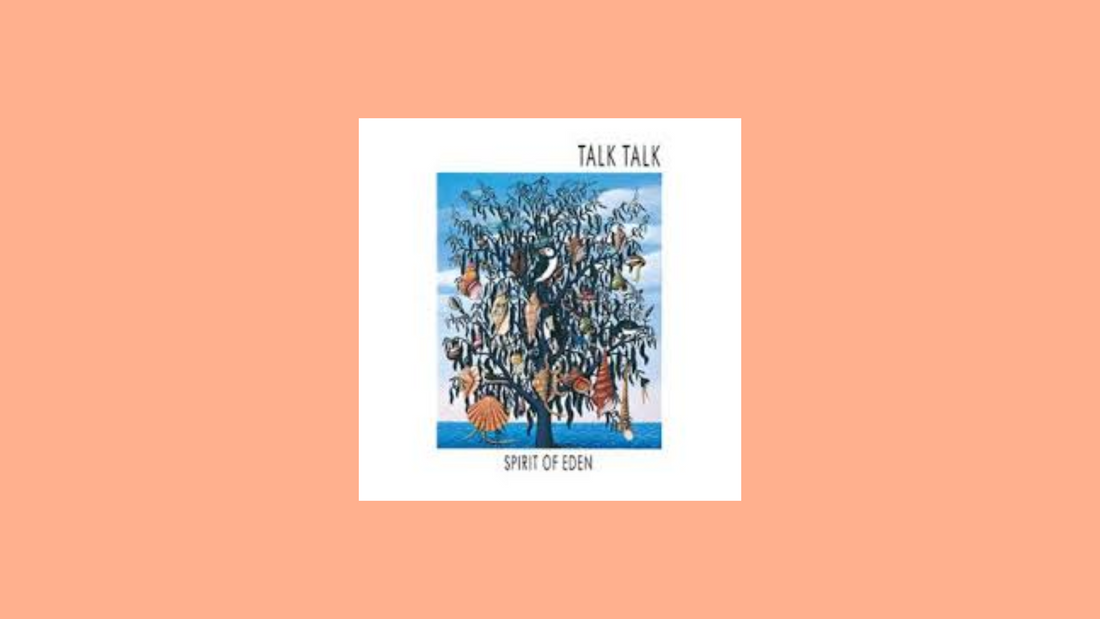
Talk Talk – Spirit of Eden (1988)
By Rafi Mercer
The first sound is almost silence. A faint rustle, a fragment of trumpet, the suggestion of organ tones, as if the room is clearing its throat before beginning. Then, slowly, a guitar line enters — hesitant, minimal — and Mark Hollis’s voice follows: fragile, yearning, poised between prayer and confession. This is Spirit of Eden, released in 1988, one of the most daring transformations in modern music. Where Talk Talk had once been a synth-pop band chasing chart success, here they abandoned commercial ambition entirely, creating a record of such stillness, space, and intensity that it birthed a new genre: post-rock.
The making of the album was itself an act of faith. Hollis, with producer Tim Friese-Greene, locked themselves in a darkened studio, working with a revolving cast of jazz, classical, and rock musicians. Hours of improvisations were recorded, then painstakingly edited, sculpted, and pared back until only the essential remained. The result was not songs in the traditional sense but pieces that unfold like landscapes: unpredictable, atmospheric, patient.
The opening track, “The Rainbow,” sets the tone. It begins with harmonica and distant trumpet, suspended in silence. Slowly, the piece gathers weight — organ swells, percussion bursts, guitar fragments. Hollis enters almost halfway through, his voice raw, unvarnished, pleading. The song builds not to climax but to rupture, noise and silence colliding.
“Eden” follows, its gospel-inflected organ and plaintive vocals giving way to sudden surges of guitar and rhythm. “Desire” is the record’s most explosive moment, moving from near silence to ferocious noise, only to collapse back into stillness. “Inheritance” is sparse, almost hymn-like, Hollis’s vocal surrounded by delicate guitar and woodwinds. “I Believe in You,” perhaps the album’s most devastating track, is a prayer for Hollis’s brother, who struggled with heroin addiction. His voice, fragile yet resolute, is carried by organ and choir-like backing, creating a sense of lament and absolution. The closing “Wealth” drifts into near silence, Hollis repeating the words “Take my freedom for giving me a sacred love”, fading into eternity.
What makes Spirit of Eden extraordinary is its refusal of compromise. This is not background music, nor is it designed for radio. It is patient, sometimes demanding, always rewarding. Silence is as important as sound. Notes hang in the air, instruments enter and vanish unpredictably. It resists categorisation: too abstract for pop, too structured for free jazz, too emotional for minimalism. Instead, it creates its own category — a music of atmosphere, devotion, and slow revelation.
Initially, the record baffled both label and listeners. EMI, expecting hits, received something utterly uncommercial. Yet over time, its reputation grew. Today, it is seen as foundational for post-rock, influencing bands like Radiohead, Sigur Rós, Mogwai, and beyond. But its importance is more than historical. It remains singular — no one else has quite captured its balance of intimacy and grandeur, fragility and force.
Listening today, the album feels deeply inclusive despite its austerity. Its openness makes it universal. Hollis’s voice carries no bravado, no artifice; it is pure vulnerability. The music does not dictate; it invites. Anyone willing to slow down, to listen with patience, can enter. It offers sanctuary for women and men, young and old, those seeking solace, those seeking confrontation. Its generosity lies in its honesty.
On vinyl, the record is breathtaking. The dynamics — from silence to eruption — are magnified. The surface crackle becomes part of the texture, blending with the rustles and breaths captured in the studio. The artwork, abstract and painterly, mirrors the music: oblique, suggestive, open. To lower the needle is to step into another world, one where time slows, where sound becomes presence, where listening becomes ritual.
More than three decades on, Spirit of Eden endures because it refuses to be consumed quickly. It cannot be streamed in fragments, cannot be background. It asks for attention, but it repays it with depth. It shows that music can be more than entertainment. It can be meditation, lament, testimony, prayer.
To play it now is to be reminded of the value of slowness, of space, of vulnerability. It is to enter a conversation with sound itself, one that continues long after the music fades. Hollis once said, “Before you play two notes, learn how to play one.” Spirit of Eden is that philosophy made manifest: one note, played with absolute truth, capable of changing everything.
Rafi Mercer writes about the spaces where music matters. For more stories from Tracks & Tales, subscribe, or click here to read more.


