发烧友酒吧与爵士俱乐部:有何不同?

发烧友酒吧与爵士俱乐部:有何不同?

作者:拉菲·默瑟

Step through the doors of a jazz club and you’ll hear the rustle of glasses before you catch the first strike of a snare. Walk into an audiophile bar, and it’s the silence you notice first — a silence tuned, held, and intentional. Both are rooms built for listening, yet their architectures of sound are utterly different. One celebrates the volatility of live improvisation; the other, the precise fidelity of recorded music. But at heart, both invite strangers into a fleeting community, formed in the space between notes.

Jazz clubs have long been social laboratories. The air thick with cigarette smoke in the 1950s, now perhaps with craft beer haze, they are places where music is written in real time. Musicians assemble, often unrehearsed, and negotiate with each other in front of an audience. A horn player throws a line into the air, the drummer replies, the pianist reshapes harmony on the fly. It is never the same twice. The architecture of the jazz club reflects this looseness — stages slightly raised, lights angled low, sound bleeding into the clatter of cutlery and conversation. The thrill comes from proximity to creation itself.

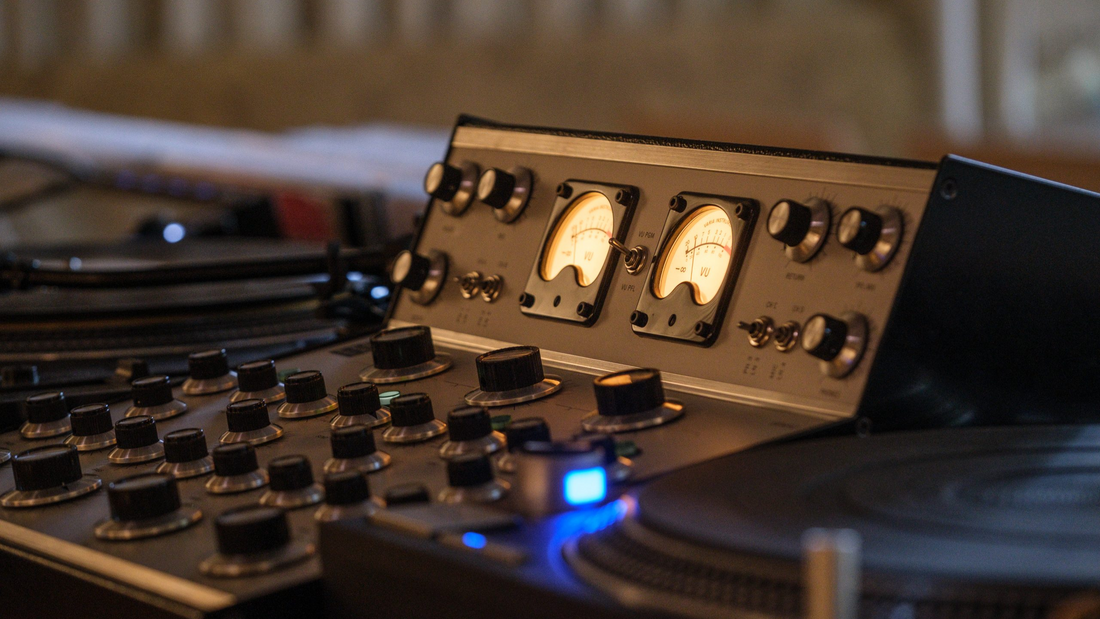
The audiophile bar is another species altogether. Here, the performance has already been captured — a record, a master tape, a file held in wax or digits. The art lies not in the improvisation of musicians but in the precision of reproduction. Loudspeakers are aligned like sculptures; valves glow like votive candles; turntables rotate with near-religious steadiness. Where the jazz club thrives on unpredictability, the audiophile bar thrives on control — the removal of noise, the careful shaping of resonance, the devotion to fidelity. In these spaces, the room becomes an instrument, tuned as finely as a saxophone reed.

Yet what they share is not to be underestimated. Both create rituals of attention. In a jazz club, the audience leans forward as a trumpet climbs higher, waiting to see if the player makes the leap. In an audiophile bar, a collective intake of breath comes as the stylus drops, anticipation hanging before the groove releases its first tone. Each room transforms strangers into witnesses. Each demands presence, whether in the chaos of improvisation or the order of hi-fi precision.

To compare them is not to choose sides. One does not diminish the other. In fact, they might be seen as two halves of the same cultural coin: one honours the living fire of music, the other tends to its enduring embers. A night at the Village Vanguard in New York is an immersion in possibility. An evening at Tokyo’s JBS Jazz Bar, or London’s Brilliant Corners, is an immersion in fidelity. Both remind us why listening matters — because music is not background, but foreground, and because to gather around it is to feel alive in ways that conversation alone cannot deliver.

So perhaps the real difference is temporal. The jazz club is about now, the instant composition of sound that will never exist again. The audiophile bar is about forever, the care with which we preserve and replay the moments that changed us. Together, they complete the circle: creation and preservation, volatility and control, fire and archive. In either, if you’re listening properly, you’ll hear the same thing — a room transformed into a community, and a community transformed by sound.

拉菲·默瑟(Rafi Mercer)致力于书写那些音乐举足轻重的空间。如欲阅读更多《Tracks & Tales》的精彩内容,请订阅,或点击此处阅读更多

返回故事

受到启发了吗?留下你的故事吧……

请注意,故事在发布前需要经过审核。

《聆听记录》

一个小小的痕迹,只为证明:你曾在此。

倾听不需要掌声。只需一份静默的认可——每日片刻的停顿,无需刻意表现,只为彼此分享。

留下痕迹——无需登录,不打扰。

本周暂停更新: 0 本周

```