

Record Store Day 2026 — The Ritual That Refused to Disappear
In an age of endless access, the queue still means something.
By Rafi Mercer
The queue begins before the light.
A thin line of silhouettes outside a small shop on a side street; hands in pockets, coffee cups steaming, breath visible in the April cold. No one speaks much. There is a shared understanding. Inside, cardboard boxes sit unopened behind the counter. Shrink-wrapped vinyl waits like sealed letters.
This is not simply shopping. It is pilgrimage.
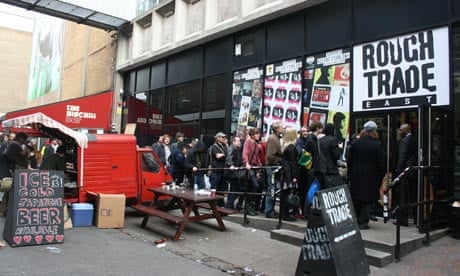
Record Store Day began in 2007, formally launched in 2008 in the United States by a group of independent record store owners who understood something before the rest of the industry did: music retail was not merely transactional — it was cultural. One of its early public ambassadors was Metallica, who helped legitimise the idea that artists and shops were allies, not adversaries.
This was the post-Napster, early-streaming era. The iPod had dematerialised music. File-sharing had hollowed out revenue. Chains had collapsed. Independent stores were closing weekly. The narrative was clear: physical music was finished.
Record Store Day was defiance disguised as celebration.
It proposed something radical — that scarcity could still matter, that object could still carry meaning, that lining up together might be more powerful than clicking alone. Limited pressings. Special reissues. Coloured vinyl. Previously unreleased sessions. Artists performing in-store again. The shop returned to being a room of encounter rather than a warehouse of product.
The idea spread quickly to the UK, Europe, Japan. It became global because the instinct it touched was universal: we do not only want access — we want occasion.
Over time, it grew. Some would say too much. Major labels entered. Pressing plants became congested. “Exclusive” became a marketing lever. There were years when the day felt closer to Black Friday than to ritual. Long queues. Secondary market flipping. £40 7-inches.
But here is the truth: even in its most commercial moments, something honest remains at its core.
On Record Store Day, attention slows.
People hold sleeves properly. They read liner notes. They debate mixes. They talk to strangers. The algorithm pauses. The room takes over.
That is why it matters.
Because what Record Store Day really shows us is not that vinyl survived — it shows us that ritual survived. The need to gather around music physically, communally, deliberately, did not disappear when streaming arrived. It simply went underground and waited for the right moment to re-emerge.
And now it is established. It is not a novelty. It is part of the cultural calendar. The third Saturday in April has weight.
For Tracks & Tales, this is not a day to “cover.” It is a mirror.
By April 2026, we will not be early-stage explorers of listening culture. We will be referenced. Indexed. Discovered in cities we have not yet walked. Ninety-seven countries already visit; by then, the network will be deeper, denser. Record Store Day will intersect with the map.
What happens when a global audience interested in listening culture wakes up on the same morning?
Possibility.
This is the year to treat it not as a sales spike but as a signal. A moment to publish something enduring. A map of where to listen. A reflection on ritual. Perhaps a small, intentional object — not hype, but craft. A slipmat. A limited essay print. A curated starter system. One thing done beautifully.
Because Record Store Day at its best is not about exclusivity. It is about presence.
The deeper reading is this: as attention fragments further, physical rituals will increase in value. Not decrease. They will become anchors in a fast world. Listening bars. Kissaten. BYOV Saturdays. Small rooms where sound is allowed to fill space without interruption.
Record Store Day predicted that before we had language for it.
It understood that music is not only content — it is architecture. Social glue. A reason to stand quietly next to someone at 8:12am on a pavement in April.
What will it become?
If it is wise, it will mature. Less hype. More curation. Fewer novelty pressings. More meaningful archives. Perhaps regional focus. Perhaps collaborations between cities. Perhaps stores acting as cultural hosts again rather than distribution points.
And if we are wise, we will participate without noise.
Not chasing the list. Not shouting about the drop.
But asking a simpler question:
Where, in your city, can you truly listen?
Record Store Day began as a survival tactic. It became a celebration. It now sits as proof that culture can re-assert itself when people decide it matters.
Queues in the cold are a small price to pay for that reminder.
Quick Questions
When did Record Store Day start?
The idea was formed in 2007 and the first official Record Store Day took place in 2008, created by independent record store owners in the United States.
Why was it created?
To support independent record stores during a period of severe industry decline and to re-establish physical music culture as communal and meaningful.
Why does it still matter now?
Because it represents ritual in an age of frictionless access — a reminder that music is an experience, not just a stream.
Rafi Mercer writes about the spaces where music matters.
For more stories from Tracks & Tales, subscribe, or click here to read more.


