
Luxman — Tubes, Transistors, and the Glow of Continuity
By Rafi Mercer
Some brands come and go with the tides of fashion. Others carry on like rivers, adapting their course yet always recognisable. Luxman belongs firmly to the latter. Founded in Osaka in 1925, it is one of the oldest names in Japanese audio, a company that has lived through shellac, vinyl, tape, CD, and streaming, always returning to the same core question: how should music feel when it fills a room? In listening bars, the answer Luxman provides is warmth — not the cloying kind, but a glow that turns nights supple, inviting, and enduring.
Luxman has never been easy to categorise. It made its name in the valve era, with amplifiers that carried a delicacy beloved by jazz enthusiasts and classical devotees alike. Then came the transistor revolution, and Luxman proved equally adept, building solid-state designs that managed to retain a sense of tone without falling into sterility. Few companies have balanced both schools so naturally. Perhaps that is why their amplifiers remain such a fixture in bars where variety matters — a Miles Davis pressing one hour, a Sly & The Family Stone reissue the next.
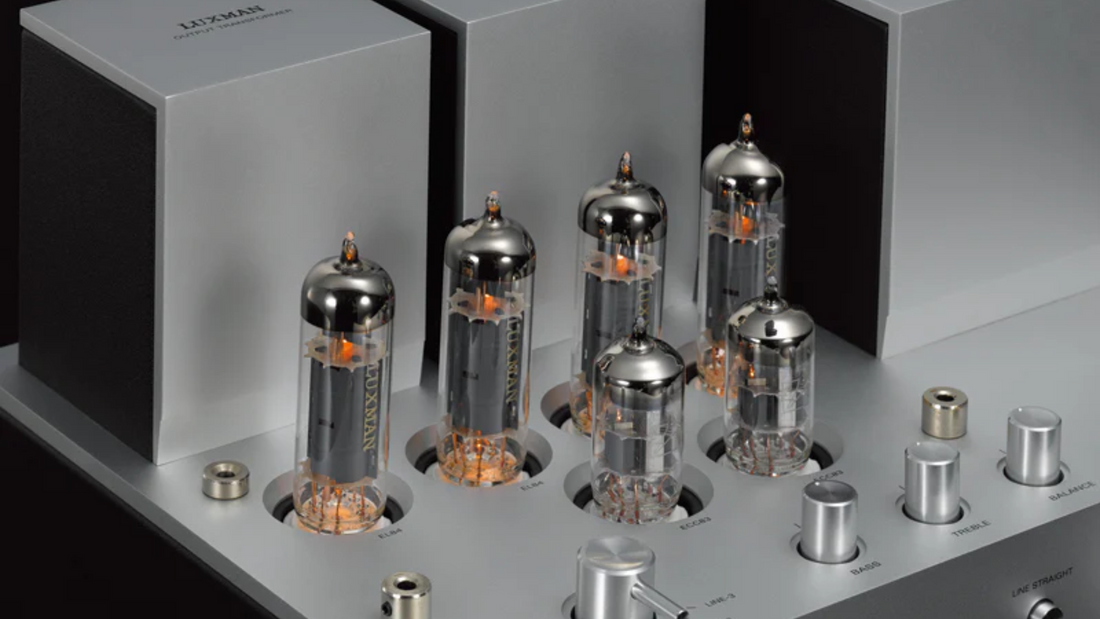
Visually, Luxman amplifiers tell their own story. Brushed aluminium faces, warm backlighting, meters that move with a gentle rhythm — they feel more like instruments than appliances. Place one behind the counter of a listening bar, and it becomes part of the theatre: a quiet pulse in the dimness, reminding you that fidelity is not just a technical feat but an atmosphere.
I remember one evening in a Shinjuku kissa where a pair of Luxman tube monoblocks powered Altec horn speakers. The sound was enveloping, not flashy — the kind of presentation that draws you into the room rather than pins you to your seat. John Coltrane’s Ballads drifted out with such intimacy that even the clink of ice in glasses seemed to move in rhythm. That is the Luxman gift: it doesn’t overwhelm, it enfolds.
Unlike McIntosh’s swagger or Accuphase’s restraint, Luxman sits in the middle ground. It has warmth without indulgence, power without bluster. It feels lived-in, human. In listening bars, that quality becomes invaluable. Nights stretch long, people linger, and the music needs to remain engaging without ever becoming fatiguing. Luxman makes that possible.
The company’s continuity also matters. Through changes of ownership, through the shifts of Japanese hi-fi culture, Luxman has retained its identity. The modern models — integrateds, preamps, phono stages — carry forward the same balance of technical rigour and emotional warmth that defined their classics. In a world where many brands have been diluted or rebadged, Luxman still feels rooted in its origins.
To hear music through Luxman is to be reminded that fidelity can be tender. That precision does not have to be cold. That the glow of a tube and the steadiness of a transistor can coexist, carrying Billie Holiday as gracefully as they carry Kraftwerk.
For listening bars, where the aim is not only to play records but to create an atmosphere people want to return to, that balance is everything. Luxman has been offering it for nearly a century, and it shows no sign of stopping.
Rafi Mercer writes about the spaces where music matters. For more stories from Tracks & Tales, subscribe, or click here to read more.


