

Nigeria — Rhythm as Nation, Sound as Inheritance
By Rafi Mercer
The first thing you notice in Nigeria is not silence, but density.
Air thick with heat and possibility. Traffic that seems to move on instinct alone. Conversations layered over generators, over engines, over distant basslines. And somewhere inside that density, rhythm — steady, insistent, unashamed of its volume.
Nigeria does not treat music as background. It treats it as infrastructure.
Stand on a balcony in Lagos as evening folds into night and you’ll hear it — Afrobeats rolling out of car windows, rooftop speakers leaning into the Atlantic air, hooks built for repetition and collective release. The sub-bass is not decorative; it is architectural. Producers here sculpt low frequencies the way architects design foundations. The groove must hold.
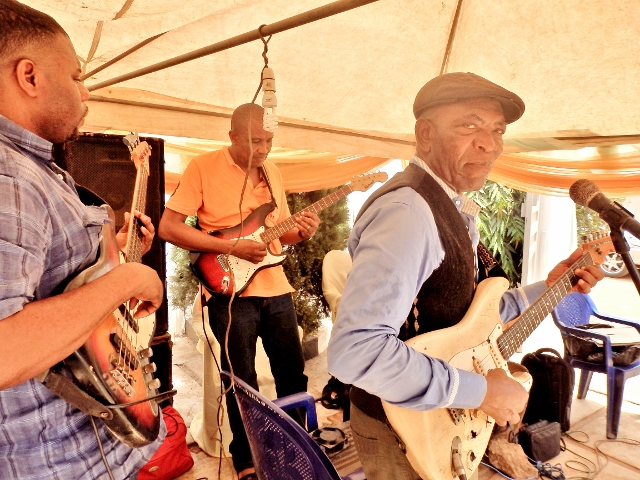
Yet Lagos is only one expression of the country’s ear.
Travel east and the guitars brighten. In cities like Enugu, highlife still breathes with warmth — clean strings, buoyant bass, horns that shimmer without aggression. The music smiles as it moves. It invites rather than overwhelms. The dancefloor feels less like conquest and more like communion.
Move north to Kano and the atmosphere shifts again. The rhythm stretches. Praise poetry and ceremonial drumming carry story as much as sound. Music rises vertically here — toward faith, toward heritage — less about velocity, more about continuity. The cadence of daily life is shaped by devotion and gathering, by voices that have travelled generations.
What binds these regions together is not genre, but instinct.
Call and response.
Polyrhythm.
Community before individualism.
Long before streaming platforms accelerated global reach, long before chart positions became international currency, Nigeria understood that music was social architecture. The crowd completes the composition. A chorus is not finished until it is answered back.
You cannot talk about Nigerian listening culture without acknowledging Fela Kuti. His Shrine in Lagos was not simply a venue; it was a statement. Afrobeat — singular — stretched time, fused jazz and funk with Yoruba percussion, and wrapped protest inside groove. It proved that rhythm could carry dissent without losing danceability.
Today’s Afrobeats — plural — travels lighter, faster, digitally optimised. Artists release tracks that move from Surulere studios to London clubs within hours. Platforms such as Spotify and Apple Music have amplified the country’s output, turning local cadence into global pulse. Yet beneath the slicker production, the same communal DNA persists.
The mix reflects the environment.
Car systems matter because traffic is constant.
Portable speakers matter because power is not always guaranteed.
Club PAs matter because celebration is not optional.
Even high-end home systems — a pair of sculptural speakers placed carefully in a Victoria Island apartment — are rarely used in solitude. Music gathers people. It frames birthdays, promotions, homecomings. It marks survival and ambition in equal measure.
And then there is the church.
If you want to understand the country’s technical ambition, attend a Sunday service. Choirs stack harmonies with precision. Drummers lock into grooves that could carry a dancefloor. Engineers ride digital desks with quiet authority. The room swells as one organism. Listening is participatory. Faith is amplified.
What fascinates me, standing at a distance and listening carefully, is this: Nigeria has not retreated into nostalgia.
Many Western cities are rediscovering the ritual of quiet rooms — vinyl temples, curated hi-fi cafés, the art of sitting still. There is beauty in that, of course. But Nigeria never abandoned the communal core. Its listening culture is kinetic, embodied, unapologetically loud.
It understands something fundamental: rhythm is civic identity.
The future of global music may well be shaped by algorithms and streaming data, but the soul of it — the part that moves bodies before it moves markets — remains rooted in places where sound is shared first and monetised second.
Nigeria listens with its whole body.
And when a nation listens like that, the world inevitably begins to follow.
Quick Questions
What defines Nigeria’s listening culture most clearly?
Collective energy — rhythm designed for shared movement, call-and-response, and community participation.
How do regional differences shape the country’s sound?
Lagos drives global Afrobeats velocity, Enugu sustains highlife warmth, and Kano carries ceremonial and devotional continuity.
Is Nigerian listening culture moving toward quiet, audiophile spaces?
Not primarily. Its core remains communal and kinetic, though quality systems and global platforms are raising production standards rapidly.
Rafi Mercer writes about the spaces where music matters.
For more stories from Tracks & Tales, subscribe, or click here to read more.


