
Abuja Listening Bars — Polished Lounges, Capital Poise, Gospel Power — Tracks & Tales Guide
Where composure meets conviction in the centre of the nation.
By Rafi Mercer
In Abuja, the sound arrives differently.
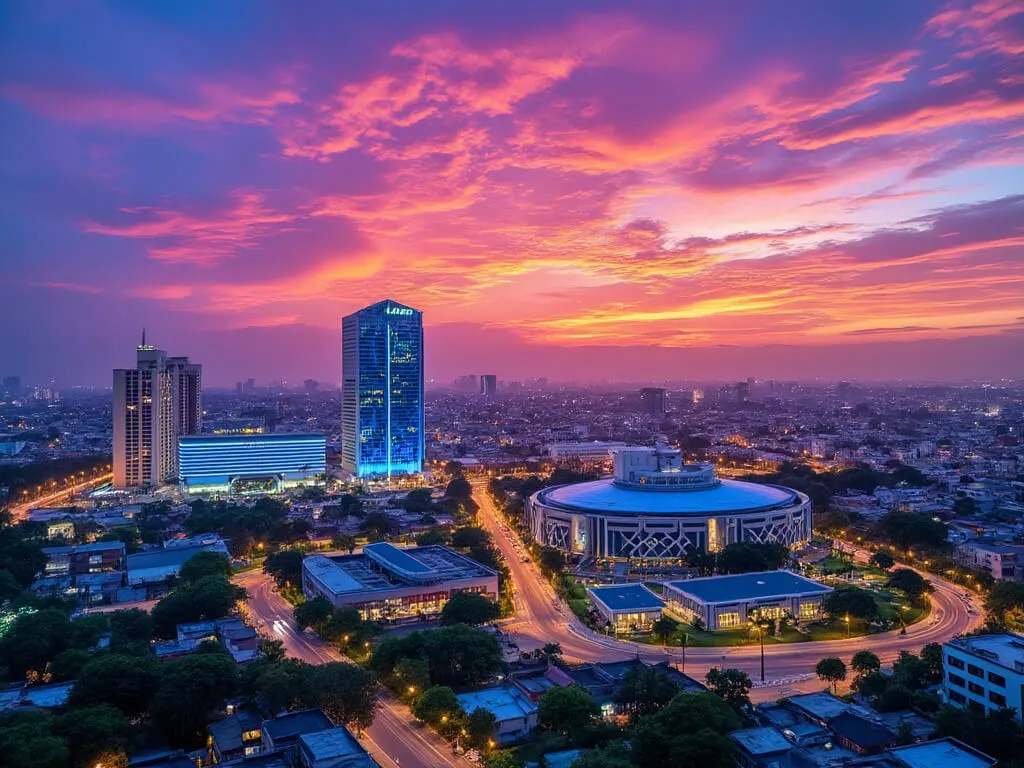
The roads are wider. The government buildings stand back from the street. There is space here — physical and psychological — and that space shapes the way music moves. Where Lagos surges, Abuja steadies. Where Port Harcourt leans into grit, the capital refines its edges.
You feel it first in the lounges.
Rooftop terraces in Wuse and Maitama hum with low conversation before the DJ raises the temperature. Live bands set up with quiet confidence — keys, bass, a tight drum kit, two vocalists who know when to hold back and when to lift the room. The mix is balanced. The lighting is considered. The crowd dresses with intention. In Abuja, listening is social, but it is also composed.
Afrobeats still drives the dancefloor — the swing undeniable, the hooks familiar — but there is a noticeable affection for R&B, gospel-influenced harmonies, and smoother tempos. The capital’s ear leans slightly toward polish. You’ll hear the lyric more clearly. You’ll notice the reverb tail. The sub still lands, but it doesn’t overwhelm the conversation.
That balance matters.
Abuja is a city of policy and diplomacy, of visiting delegates and upward trajectories. Celebration exists here, of course — weddings that unfold across vast halls with formidable sound systems, birthdays where the bass blooms late into the night — but there is also a sense of presentation. Music becomes atmosphere, a curated extension of identity.
And then there is Sunday.
If you want to understand Abuja’s deeper listening culture, step into a church service. The systems can be formidable: line arrays flown carefully, digital desks operated with skill, choirs arranged in tiers of colour and harmony. Gospel here is not background devotion; it is full-bodied production. The congregation sings as one. The room swells. You realise quickly that the capital’s sense of order does not mute its emotion — it channels it.
Millennium Park offers another vantage point. On certain evenings, small gatherings form — portable speakers, shared playlists, a circle of friends watching the light drain from the sky. The music is less about spectacle and more about shared presence. Even outdoors, the instinct is to keep the mix clean, the volume assertive but not chaotic.
For Tracks & Tales, Abuja represents a different archetype of listening city. It is not driven solely by export ambition or raw nightlife energy. It is about refinement without losing rhythm. A city that understands that sound can elevate a room without dominating it.
There may not yet be silent vinyl temples or ritualised hi-fi cafés, but the appetite for quality is there. The infrastructure exists. The cultural pride runs deep. What Abuja proves is that listening culture does not need frenzy to feel alive. It can hold itself upright.
The capital listens with composure — and when it chooses to rise, it does so together.
Venues to Know
- Coming soon — add a venue: help us map Abuja’s listening spaces. Use our short form: Submit a venue.
- Explore the culture: see more from the region — Nigeria.
- Stay connected: get Abuja updates first — Subscribe.
In a city built on structure and statecraft, Abuja lets rhythm speak with quiet authority.
Rafi Mercer writes about the spaces where music matters.
For more stories from Tracks & Tales, subscribe, or click here to read more.
The Listening Register
A small trace to say: you were here.
Listening doesn’t need applause. Just a quiet acknowledgement — a daily pause, shared without performance.
Leave a trace — no login, no noise.
Paused this week: 0 this week
Discover and book listening bars selected by the TRACKS & TALES Guide
More Reads From Tracks & Tales-

DJ Bar Bridge Shinjuku — Tokyo
DJ Bar Bridge Shibuya is a tenth-floor DJ bar overlooking Shibuya Crossing, with a Rey Audio sound system, long-running resident DJs, a ¥1,000 door and hours of 8pm–5am.
DJ Bar Bridge Shinjuku — Tokyo
DJ Bar Bridge Shibuya is a tenth-floor DJ bar overlooking Shibuya Crossing, with a Rey Audio sound system, long-running resident DJs, a ¥1,000 door and hours of 8pm–5am.
-

Maru Hi-Fi, Newcastle — The Quiet Door on Union...
Maru Hi-Fi is a jazz kissa-inspired listening bar in Newcastle West, NSW, with a 10,000-record collection, Tannoy Westminster speakers, live jazz and BYO Records nights.
Maru Hi-Fi, Newcastle — The Quiet Door on Union...
Maru Hi-Fi is a jazz kissa-inspired listening bar in Newcastle West, NSW, with a 10,000-record collection, Tannoy Westminster speakers, live jazz and BYO Records nights.
-

Hi-Fi Disco Bar Chaos — Maruyamacho's Permissio...
Maruyamacho climbs. Walk west out of Shibuya and the ground lifts you through a district that has spent decades in the business of discretion, love hotels shoulder to shoulder, their...
Hi-Fi Disco Bar Chaos — Maruyamacho's Permissio...
Maruyamacho climbs. Walk west out of Shibuya and the ground lifts you through a district that has spent decades in the business of discretion, love hotels shoulder to shoulder, their...
-

Stylus Soundlounge — Charlotte, North Carolina
Stylus Soundlounge in Charlotte, NC — a disco-noir listening room at The Pass built around a collector's vintage analogue system, with Host Selectors Wednesday to Saturday. A Tracks & Tales...
Stylus Soundlounge — Charlotte, North Carolina
Stylus Soundlounge in Charlotte, NC — a disco-noir listening room at The Pass built around a collector's vintage analogue system, with Host Selectors Wednesday to Saturday. A Tracks & Tales...


The Daily Read
More Reads From Tracks & Tales-

The Side Ends
When a record side ends, nobody decides for you what happens next. That small moment sits underneath four words, listen, read, look, watch, and an order that runs from the...
The Side Ends
When a record side ends, nobody decides for you what happens next. That small moment sits underneath four words, listen, read, look, watch, and an order that runs from the...
-

Stevie Wonder, Fifty Years in the Key of Life
Yesterday, Stevie Wonder's Songs in the Key of Life turned fifty. The last session ended at 4:54 in the morning, and this week the record still asks for the best...
Stevie Wonder, Fifty Years in the Key of Life
Yesterday, Stevie Wonder's Songs in the Key of Life turned fifty. The last session ended at 4:54 in the morning, and this week the record still asks for the best...
-

Twenty-Six Addresses
An order list puts everything in alphabetical order, which is the least romantic way to watch anything travel. Twenty-six copies, eighteen places, and in each one the listening had already...
Twenty-Six Addresses
An order list puts everything in alphabetical order, which is the least romantic way to watch anything travel. Twenty-six copies, eighteen places, and in each one the listening had already...
-

The Long Track
A September traffic queue, an Electribe 101 record put on for no good reason, and a title track that wouldn't end. Was it nostalgia, or just being trapped? Rafi Mercer...
The Long Track
A September traffic queue, an Electribe 101 record put on for no good reason, and a title track that wouldn't end. Was it nostalgia, or just being trapped? Rafi Mercer...


The Listening Shelf
More Reads From Tracks & Tales-

The 100 records that are worth your time
Most charts count arrivals. This one counts staying. A hundred records from the album reviews, ranked by the total time readers gave each one across a full year. Not views....
The 100 records that are worth your time
Most charts count arrivals. This one counts staying. A hundred records from the album reviews, ranked by the total time readers gave each one across a full year. Not views....
-

Blue Brazil — Various Artists (1994)
Blue Brazil wears the Blue Note logo but holds none of its sessions. Compiled by London DJ Joe Davis from EMI-Odeon's Brazilian vaults in 1994, it's a record built by...
Blue Brazil — Various Artists (1994)
Blue Brazil wears the Blue Note logo but holds none of its sessions. Compiled by London DJ Joe Davis from EMI-Odeon's Brazilian vaults in 1994, it's a record built by...
-

Nightclubbing — Grace Jones (1981)
Grace Jones's Nightclubbing is remembered as one of the great album covers and heard far less often than it is seen. Take the image away and what's left is a...
Nightclubbing — Grace Jones (1981)
Grace Jones's Nightclubbing is remembered as one of the great album covers and heard far less often than it is seen. Take the image away and what's left is a...
-

Dance, No One's Watching — Ezra Collective (2024)
Ezra Collective's third album was recorded at Abbey Road in the days after Notting Hill Carnival, with friends and family filling the studio so the band wouldn't have to play...
Dance, No One's Watching — Ezra Collective (2024)
Ezra Collective's third album was recorded at Abbey Road in the days after Notting Hill Carnival, with friends and family filling the studio so the band wouldn't have to play...


The Pour
More Reads From Tracks & Tales-

Angostura — The Small Bottle That Teaches a Dri...
A new Rafi Mercer essay exploring the deep history and quiet magic of Angostura bitters — the secretive, aromatic force that gives the Old Fashioned its soul.
Angostura — The Small Bottle That Teaches a Dri...
A new Rafi Mercer essay exploring the deep history and quiet magic of Angostura bitters — the secretive, aromatic force that gives the Old Fashioned its soul.
-

The Zest That Changes Everything — On the Quiet...
The quiet power of small rituals — from twisting orange zest over an Old Fashioned to the subtle art of deep listening.
The Zest That Changes Everything — On the Quiet...
The quiet power of small rituals — from twisting orange zest over an Old Fashioned to the subtle art of deep listening.
-

The Orange That Opens the Room
A quiet meditation on the ritual of an Old Fashioned — the citrus flare, the warmth it opens, and the small brightness that can shift a whole night.
The Orange That Opens the Room
A quiet meditation on the ritual of an Old Fashioned — the citrus flare, the warmth it opens, and the small brightness that can shift a whole night.
-

Five Drinks for the Home Listening Bar
Five drinks that shape the perfect home listening bar — from the Old Fashioned to the Highball, Rafi Mercer explores the art of sound and taste.
Five Drinks for the Home Listening Bar
Five drinks that shape the perfect home listening bar — from the Old Fashioned to the Highball, Rafi Mercer explores the art of sound and taste.


